Prepare before the last morning
Cold exposes weaknesses that a short valley commute may conceal. A tired low-voltage battery, marginal washer protection or an occasional brake warning becomes more consequential when the next workshop is far away. Inspect the car early enough to arrange repairs, not while everyone is already waiting with luggage.
Read the handbook for the actual model and wheel specification. An EV, plug-in hybrid and diesel car have different operating needs, while two versions of the same model may have different chain clearance or towing limits. If you borrow or rent the car, take time to find the controls, warning explanations, recovery contact and emergency equipment.
Numbered departure checks
- Confirm the route. Check the intended pass, forecast, restrictions and alternatives. Save the relevant details before entering areas with uncertain mobile coverage.
- Inspect every tyre. Check damage, tread, cold pressure and the correct specification for the load. Confirm any chains are approved for the fitted wheels and that you know how to install them.
- Prove visibility. Clean all glass, mirrors, cameras and lights. Test the washers, wipers, demisting and rear-window heater before setting off.
- Resolve warnings. Investigate brake, tyre, battery and stability-system warnings. A warning that disappears after restarting is not proof that its cause is harmless.
- Set the energy plan. Fill or charge with a margin for queues and detours. Identify the next practical stop and an alternative before leaving the valley.
- Load and brief. Secure luggage, keep warm layers accessible and tell passengers what the plan is if the road closes. Let someone know your intended route.
Brakes deserve more than a glance
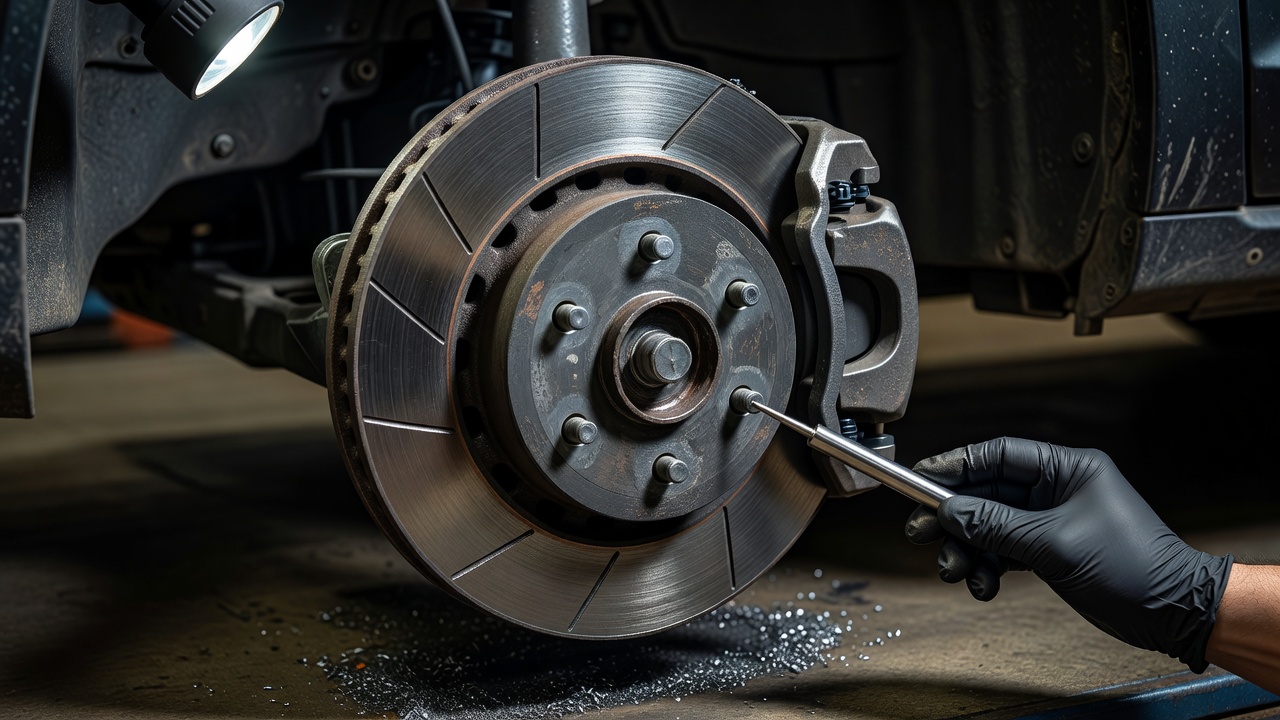
Mountain descents ask the braking system to manage sustained energy, not just occasional urban stops. Arrange an inspection if there is vibration, pulling, grinding, unusual pedal travel or a warning. Brake fluid maintenance must follow the manufacturer's schedule. Do not postpone a known fault because the car usually stops adequately on a flat road.
EVs and hybrids may use friction brakes less often because regeneration handles some deceleration. That does not make the mechanical brakes maintenance-free. Corrosion and sticking components can still develop. Follow the maker's care instructions and have uncertainty checked professionally; do not invent high-speed cleaning manoeuvres on public roads.
Protect starting, cooling and visibility
The low-voltage battery matters in electric cars as well as combustion vehicles. It powers control systems and can prevent a vehicle from starting its normal operating sequence when weak. If starting behaviour is inconsistent or the battery's condition is unknown, arrange a suitable test. Follow the handbook for assistance procedures; jump-start methods are not interchangeable across models.
Use the specified coolant and maintain its approved protection level. Do not open a hot cooling system or mix fluids simply because their colours look similar. Combustion vehicles also need the correct oil and fuel for the expected conditions. A workshop can assess protection and investigate leaks before they become a roadside problem.
Washer fluid must suit the temperatures you may encounter, including the exposed section rather than only your departure town. Follow the product's dilution instructions. Ice in a washer system can leave you unable to clear road spray precisely when visibility matters most. Carry a proper scraper and snow brush, and clear the roof so snow cannot slide onto the windscreen or another vehicle.
Pack for a stopped vehicle
Warm layers, gloves, hats and blankets should be reachable without emptying a roof box. Add drinking water, food, essential medication, a charged phone and a suitable charging cable or power bank. A torch is more useful when its batteries work and it can be found in the dark. Include a first-aid kit and the emergency equipment required for your vehicle and route.
A compact shovel can help in limited situations, but it does not justify leaving a maintained road. Carry any approved traction equipment and practise with it before the trip. Store heavy items low and secure them against sudden braking. Keep emergency access clear; loose tools in the passenger compartment can become hazards.
Pack for the hours when the car is not moving.
Know when the checklist says no
If the tyres are unsuitable, a brake warning remains unresolved or the weather exceeds your experience, the correct result is not another accessory. Delay, change route or choose another vehicle. For unfamiliar mountain roads, daylight and generous time are useful resources, not guarantees.
Before leaving the last comfortable stop, repeat the short check: road status, vehicle condition, energy, people and alternatives. Use official traffic information for the live situation. No maintenance checklist can make a closed pass open or prevent conditions from changing after departure.