Check the road, not only the destination
A town forecast cannot fully describe a high crossing. Wind, drifting snow and visibility may change sharply between the sheltered approach and the plateau. Check the specific route on Statens vegvesen's traffic service, then compare weather warnings from Yr. Check again near departure and before leaving the last practical stopping place.
Rv7 across Hardangervidda, E134 over Haukelifjell, E16 over Filefjell and E6 across Dovrefjell have different characteristics and alternatives. Do not assume one route will share another's status. Scenic roads such as Trollstigen and Sognefjellet can have seasonal closures; a summer photograph is not evidence of winter access.
Keep a meaningful alternative
A diversion may involve more than extra distance. It can change charging availability, fuel stops, overnight accommodation and the time you reach the most exposed section. Identify an alternative while you still have fuel or battery, daylight and a sensible place to wait. Turning back early usually preserves more options than pushing to the barrier.
Never drive past a closure because your vehicle has AWD, chains or high ground clearance. Restrictions can reflect visibility, avalanche exposure, recovery limitations or active road operations rather than the ability of one car to move. Road crews decide whether and how the crossing operates.
The best escape route is the one you can still reach without stretching the vehicle.
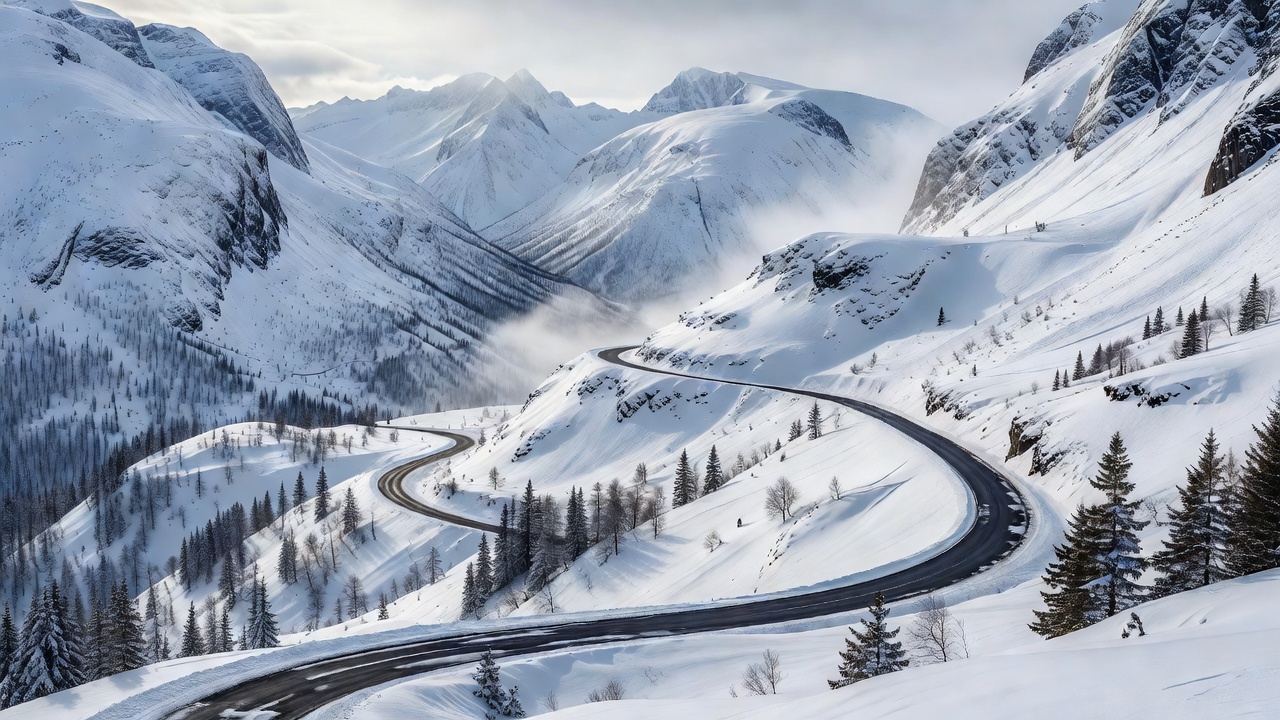
Understand convoy operation before joining
Some exposed roads operate under controlled convoy driving, known as kolonnekjøring. Waiting time and admission depend on actual conditions and the operator's assessment. Having arrived at the queue does not guarantee passage. Staff may turn away a vehicle that is unsuitable or inadequately prepared.
Arrive with sufficient energy, warm clothing and supplies. Clear snow from the vehicle and keep lights and windows usable. Listen to the briefing and follow the lead vehicle and road crew exactly. Do not overtake, leave the convoy or stop for photography. Use the instructed spacing rather than importing an arbitrary distance from an online guide.
If visibility becomes difficult, remain attentive and follow the instructions already given. If something goes wrong, alert the convoy staff as directed. Do not wander away from the vehicle into poor visibility. The relevant operator's current instructions take precedence over a general description of convoy driving.
Manage speed before the descent
Reduce speed before bends and steep sections, not while already asking the tyres for substantial cornering grip. Leave room for changing traction and oncoming traffic. A posted limit is a maximum under suitable conditions, not a target on snow or ice. If you cannot see enough road to stop safely, reduce speed further or stop at a suitable safe location.
Use the engine-braking or downhill-control procedure recommended for your vehicle. Avoid coasting in neutral and do not rely exclusively on regenerative braking in an EV, because it may be limited. Long descents can overheat friction brakes if used improperly. A burning smell, abnormal pedal feel or warning requires a safe stop and professional assessment, not a test of how much farther the brakes will last.
On narrow sections, look ahead for passing places and allow room for larger vehicles. Do not assume every bend has enough width for two cars. Park only where permitted and where the vehicle will not obstruct ploughs, traffic or emergency access. A picturesque verge can conceal soft snow or an unprotected drop.
Check rules for the country and vehicle
Norway requires suitable grip for the conditions, daytime use of appropriate lights and seat belts. Tyre and equipment obligations depend on vehicle category and season. Drivers of rental cars should check the fitted equipment themselves rather than assuming the booking description proves compliance.
Cross-border journeys need a fresh check. Sweden's winter-tyre rules and Finland's weather-dependent winter requirements do not simply duplicate Norwegian rules. Consult Transportstyrelsen for Sweden and Traficom for Finland. Local studded-tyre restrictions, towing rules and vehicle weight can change the answer. These guides are not a complete legal checklist.
Make the decision while it is still easy
Stop before the exposed section and ask three questions: is the road operating, is the car correctly equipped, and can everyone tolerate a delay? If any answer is uncertain, resolve it before continuing. A booking, a capable drivetrain or a familiar route does not make deteriorating conditions less serious.