Separate energy use from battery temperature
Cold-weather EV performance involves several different effects. The cabin needs heat, the battery may need thermal conditioning, and winter roads can increase rolling resistance. Air resistance also changes with conditions, while a strong headwind can make the energy requirement rise noticeably. A single claimed winter-range percentage cannot describe every combination.
A cold battery may deliver or accept power differently from a warm one. The car's battery-management system can restrict charging, acceleration or regenerative braking to protect the cells. These restrictions do not automatically indicate a fault. Read the relevant dashboard messages and the handbook rather than assuming the vehicle will behave exactly as it did after a mild-weather motorway run.
Start with the actual journey
Build the route around available roads and charging locations, not only the shortest distance. A crossing near Filefjell may involve different exposure and alternatives from a route through a valley. Check whether the pass is open before refining the charging plan. If a closure forces a detour, the original energy estimate may no longer be useful.
Elevation matters, but it is not a simple round-trip cancellation. Climbing requires energy; descending may recover some through regeneration, depending on conditions and battery limits. The recovery is not complete, and the return descent does not help you reach a charger on the outward climb. Plan the uphill leg on its own terms.
Do not spend tomorrow's downhill recovery on today's climb.
Use preconditioning deliberately
If supported, preheating the cabin while connected can reduce the energy drawn from the traction battery at departure. The result depends on the vehicle, ambient temperature and available supply. Some charging connections cannot cover every heating demand. Confirm the car is actually drawing power and that its scheduled departure settings match your plans.
Battery preconditioning for rapid charging is a separate feature. Many cars trigger it when a compatible fast charger is selected in the built-in navigation, but others use a manual control or a different process. Cabin heating alone does not prove the battery is ready for high charging power. Consult the model-specific instructions and allow adequate lead time.
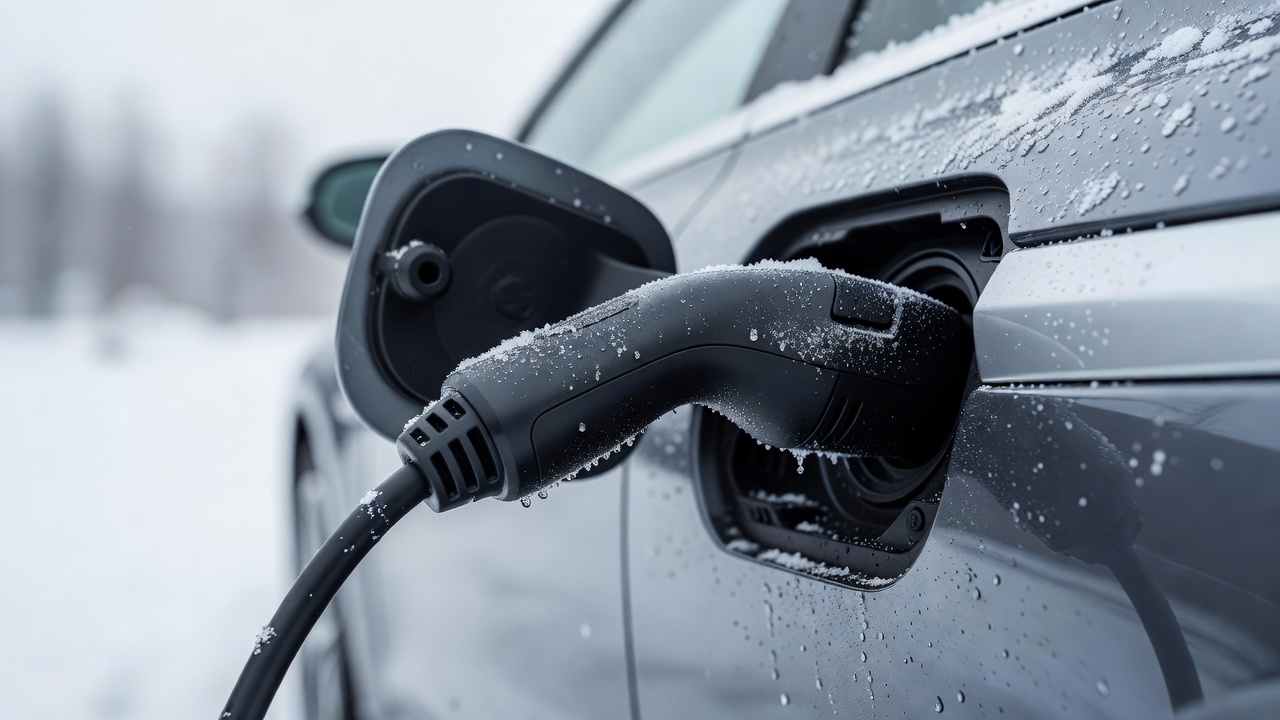
Plan a charging stop that can fail safely
A charger appearing on a map is not a guarantee of immediate service. Look at connector compatibility, access hours, operator status and the practical approach to the site. Snow clearance, queues and a failed unit can all matter. Where possible, prefer a location with several suitable chargers and a reachable alternative.
Set up the necessary payment method before leaving reliable connectivity. Keep a payment card and any relevant operator details available, rather than depending on one phone application. Record the alternative location too. Your backup should remain reachable with a realistic reserve; another charger beyond your remaining range is not a backup.
Peak charging power is a headline, not an appointment. Actual power varies with battery temperature, state of charge, charger capability and other constraints. A high-power unit cannot force a cold battery to accept its advertised maximum. Leave time for a slower session and use the vehicle's predicted completion time as a changing estimate.
Expect a different pedal response
Regenerative braking can be reduced when the battery is cold or nearly full. Some cars blend friction braking to maintain a familiar deceleration; others feel different when you lift the accelerator. Know your model's behaviour before a descent. Use the brake pedal as required and do not assume a particular drive mode guarantees grip on ice.
Downhill speed should be controlled early and smoothly. Follow manufacturer guidance for slippery conditions rather than improvising with strong regeneration settings. Stability systems can help, but the tyres still set the limit. The winter-grip guide explains why an electric drivetrain does not change that basic relationship.
Leave energy for waiting and choices
A stopped EV can maintain cabin warmth, but the duration depends on temperature, vehicle efficiency, starting charge and heating demand. There is no universal safe waiting time. Carry warm clothing and blankets even if the cabin normally heats quickly. Preserve visibility and ventilation, and follow road-crew instructions if a queue becomes a managed convoy.
Before the exposed section, compare remaining energy, observed consumption and the next realistic refuge. Charge earlier if uncertainty is growing. Choosing a lower valley route or staying overnight can be a stronger decision than proving the car can cross with very little remaining charge.